

Welcome back!
The unprecedented deluge of both IG and HY issuance to finance the multi-trillion AI infrastructure buildout continues unabated.
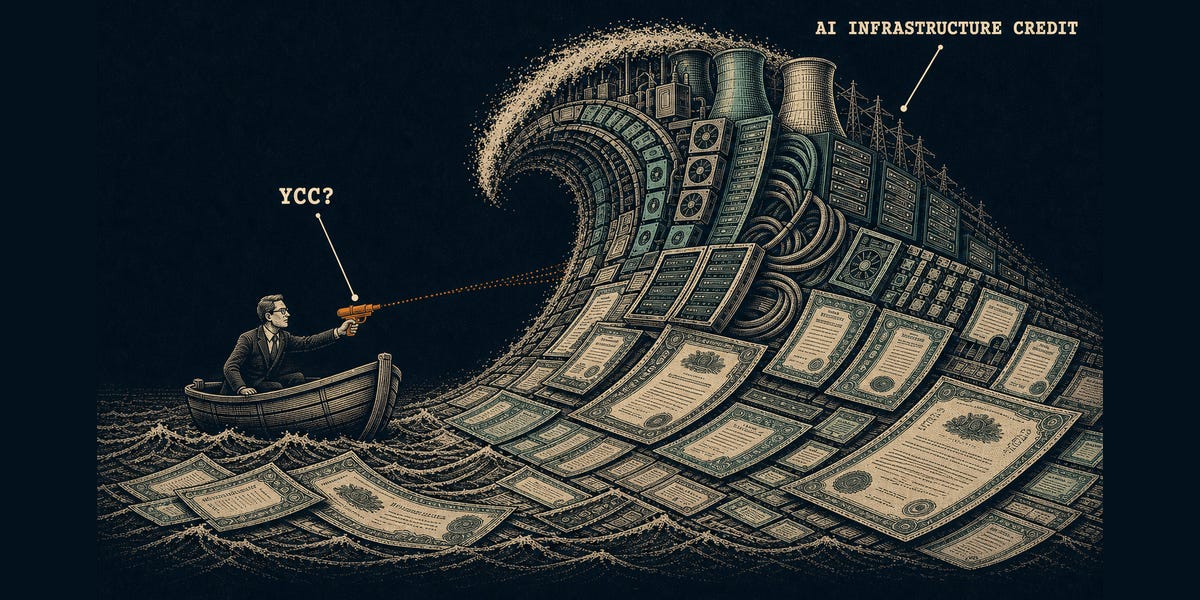
Meanwhile, as the US national debt crossed the $40T mark, Scott Bessent shot a first salvo in his mission to tame the long-end of the curve.
The problem?
Bessent is trying to get the market to do the work for him at a time when competition for the marginal dollar into high-grade duration paper is heating up.
He took out his water pistol (doubling the cap on 10-30Y buybacks to $4B) in what was a signalling move more than anything.
A seemingly recurring feature in the Bessent playbook. Remember this?

Even though Wednesday’s announcement sparked an initial rally in everything from equities to bitcoin, credit markets were quick to sniff this out.
By Friday, the 10Y and 30Y completely reversed their initial move:
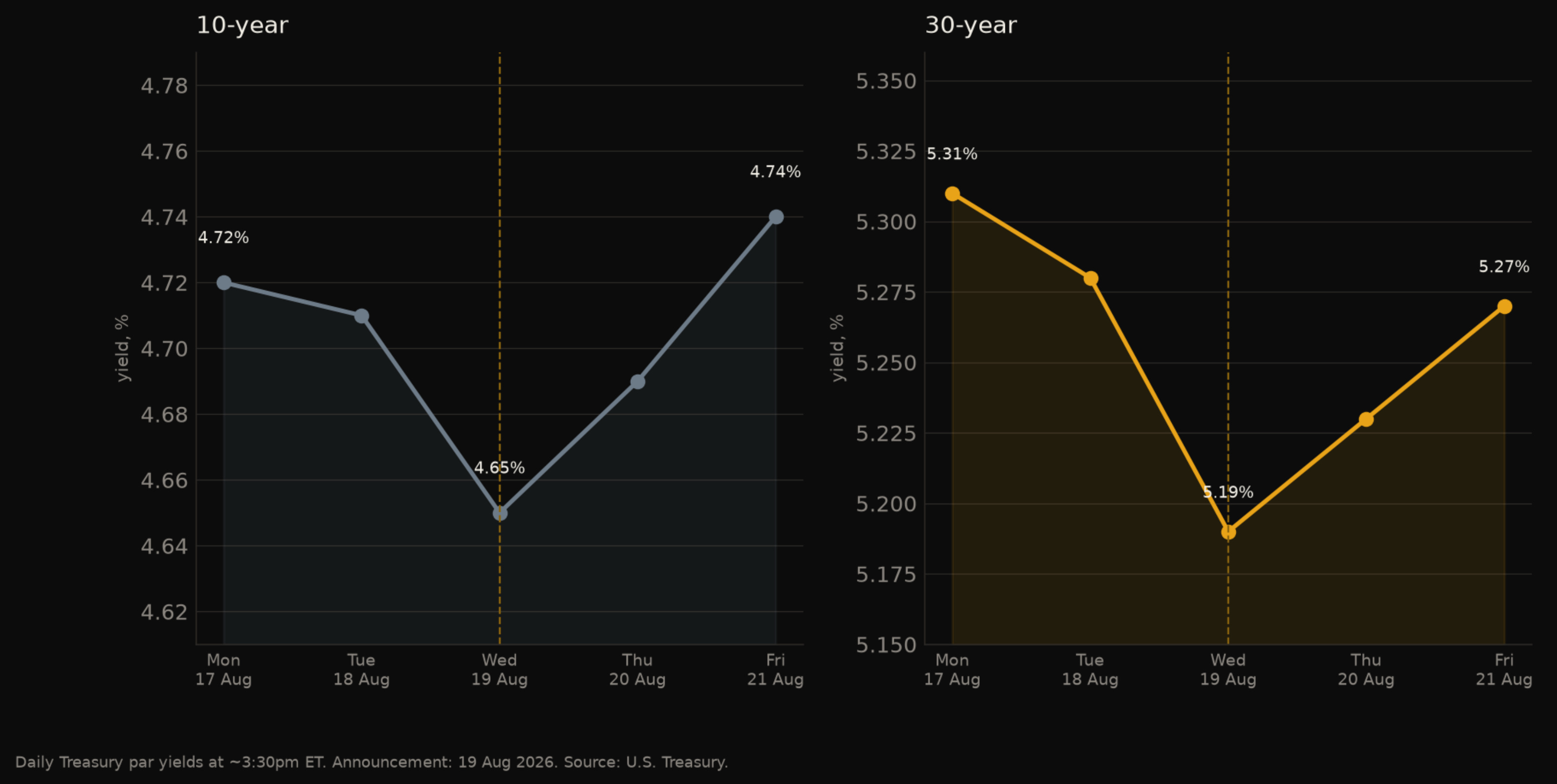
The technicals are clearly not working in his favour.
The reality is that Bessent’s leverage with the market is directly tied to the AI infrastructure buildout.
The marginal real-money buyer of long-dated government debt is now being offered a recurring menu of high-grade corporate paper at increasingly attractive spreads and all-in yields.
A fascinating tug-of-war dynamic that is set to continue through year-end and beyond as the market’s ability to absorb new issuance gets tested.
The US Treasury is Competing for Liquidity
Scott Bessent more or less confirmed this game plan to the WSJ:
“Part of it is signalling here, and to show that we believe that the yields don’t reflect the underlying fundamentals.” – Scott Bessent
The issue is that Bessent is fighting major technical headwinds when it comes to pricing long-duration credit.
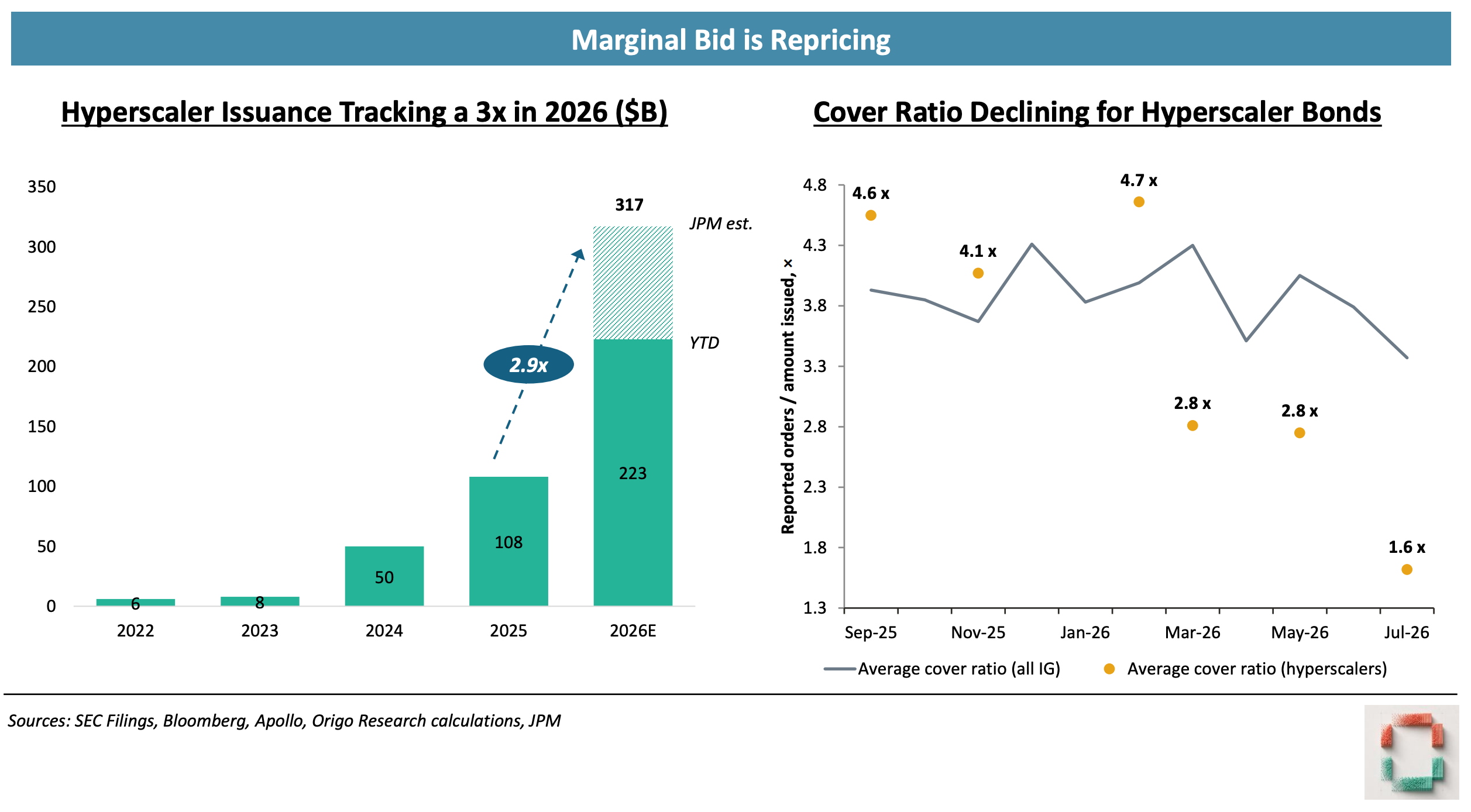
Hyperscaler issuance is currently on pace to reach $316B according to JPM’s latest August revision, or 3x last year’s issuance.
IG credit markets are incredibly deep but even then this is forcing a repricing at the margin:
Hyperscaler books fell from nearly 5x covered in February to below 2x
Median new-issue concession increased to 12bps in 2026
Technology credit now trades 9bps wider than the overall IG index
Insurers, pension funds and global credit portfolios are bumping up against concentration limits and an ultimately finite set of risk and duration budgets.
This week, Blackstone / QTS priced $3.9B of senior secured notes for the Microsoft-linked Georgia DC (Project Odyssey) at an effective YTM of 7.2%.
This compares to an April ($4.6B) QTS print of 5.7% – and although there may be some structural differences, that paper was indicated at 7.16% earlier this week.
The competition for dollars is most pronounced at the long-end of the curve where even top issuers are having to pay up for duration.
Earlier this month Alphabet priced $23.75B of fixed-rate bonds. All the tranches north of 20Y got priced at >100 bps for effective yields between 6.3% and 6.5%.
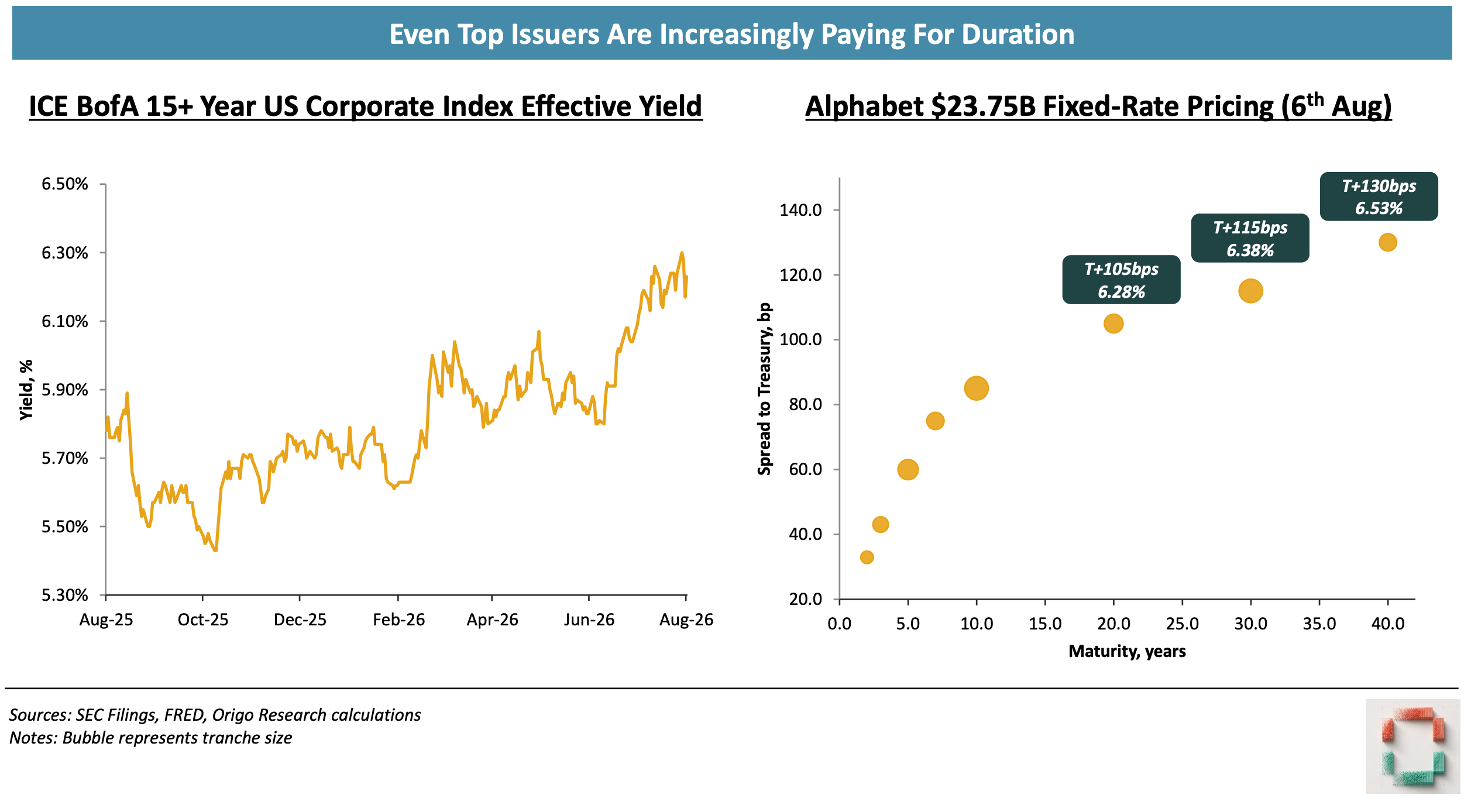
The broader effective yield for 15+ year paper has been steadily increasing all year, and this trend does not appear to stop anytime soon:
AI infra build-out continues = more issuance
AI infra build-out stalls = negative credit event
This dynamic sets us up for compelling entry points into credit in the quarters ahead as spreads continue to widen and / or something eventually breaks.
We are already seeing the knock-on effects across the risk curve – as evidenced by CCC spreads crossing the 1,000 bps threshold into distressed territory – ahead of a 2028-29 maturity wall (which could in fact, be different this time!)
Apollo & Athene Well Positioned
Long-time readers know that we hold a core position in APO 0.00%↑ which we view as a structural long-term winner in a number of macro scenarios.
This is because of Athene’s ability to layer into widening spreads with meaningful incremental inflows that are detached from the traditional LP cycle.
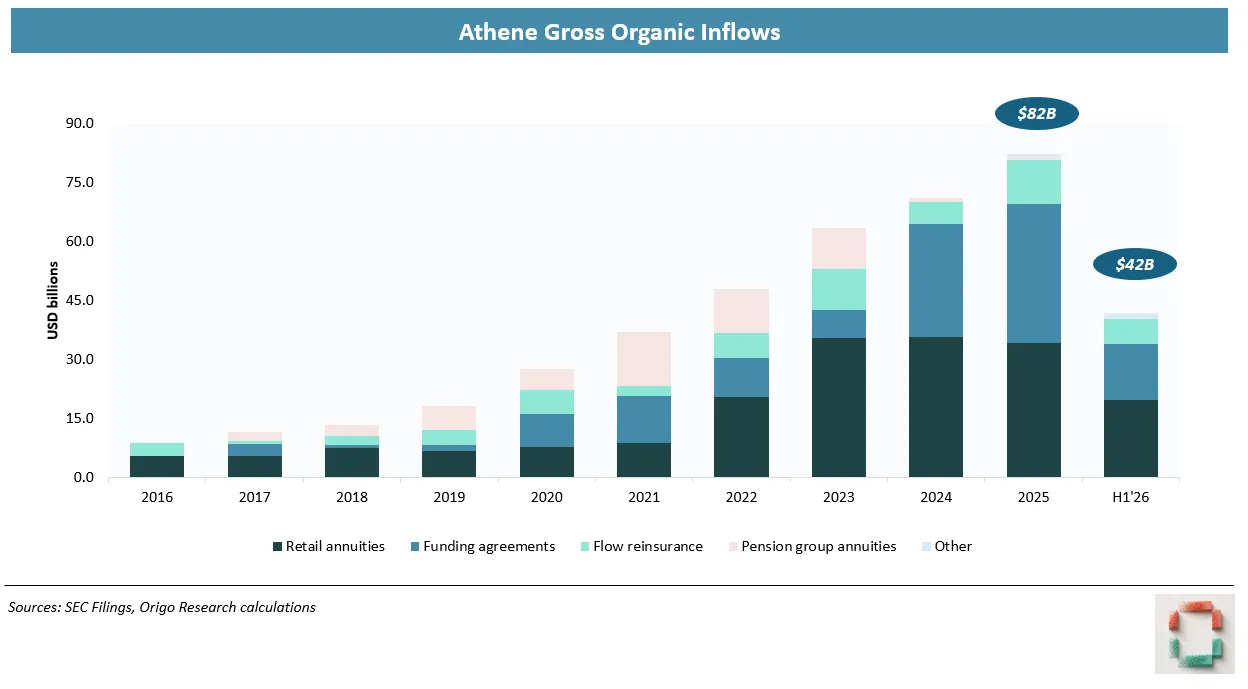
Athene originates ~$82B per annum in long-duration liabilities and has been matching that pace so far this year with $42B in H1 (notably with a rebalancing away from funding agreements which dominated FY25).
Additionally, we view any shake-up / stress in the industry as long-term beneficial given the platform’s best-in-class opex / origination / risk underwriting.
Athene will be a major beneficiary of increased yields in high-grade, long duration credit and we expect increasingly profitable vintages and improving SRE economics to start feeding through into APO 0.00%↑ FY27 numbers.
Here is a recap of the Athene & Apollo flywheel unit economics:
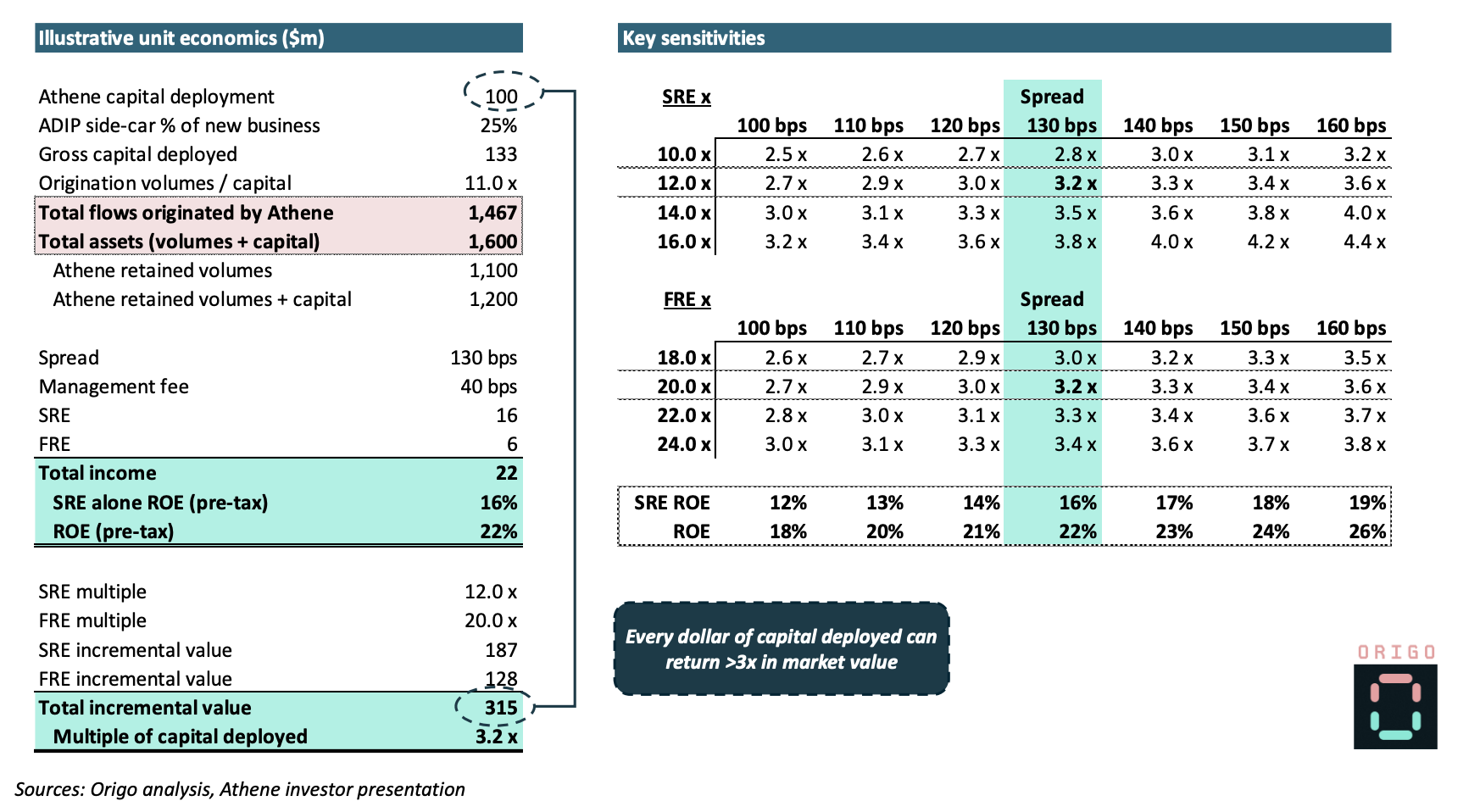
In particular, we view any noise surrounding life insurance / private credit as a buying opportunity. The developing Guggenheim saga could be a further catalyst for (welcome) weakness in that respect.
For a deeper perspective on Athene you can access our original thesis here:

Hope you enjoyed this weekly edition!
In case you missed it, earlier this week we published (i) our thoughts on Klarna following a 30% drop post Q2 results and (ii) our latest view on the PYPL 2050s as merger discussions with Stripe/Advent appear to be heating up.
You can find these here:
Enjoy the rest of your weekend!