

This is a follow-on update from: PayPal 3.25% 2050s: Put Option in Play
It’s been over a month since Reuters first reported Stripe and Advent’s all-cash offer to take PYPL private at $60.5 / share.
After a few weeks of muted news flow, The WSJ came out with the following last Friday — suggesting discussions were still very much live, with a potentially imminent resolution:
“Stripe and Advent in July proposed paying $60.50 a share for PayPal, a price PayPal viewed as insufficient, some of the people said. The two sides have since been negotiating a potentially higher price, the people said.
It is possible a deal could come together in the coming weeks, though there are no guarantees the parties will reach an agreement.” — WSJ
As a brief recap, we have been interested in the PYPL 3.25% 2050s (the lowest dollar price bonds) which we viewed as mispriced relative to the probability of a par take-out in an M&A scenario.
Given our read of the (limited) S&U details we viewed the CoC put as “in-play” (ratings downgrade) and in fact a pro-active clean-up as being most likely given both (i) deal & regulatory dynamics and (ii) reported equity contributions:
Buyers: Stripe + Advent International (joint offer)
Price: $60.5 share in cash / $53B equity value (28% premium to unaffected)
Financing: $50B committed bank financing
Equity: $17B from Stripe / Advent / Block (per CNBC)
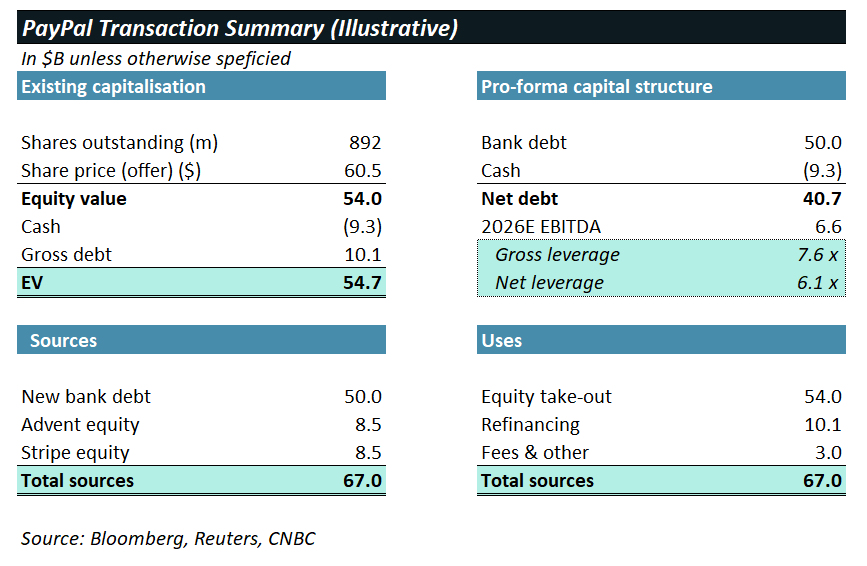
Origo illustrative S&U at announcement:
The bonds retraced post the initial news, likely due to a combination of the following:
Limited follow-on news flow
Stripe / OpenRouter deal (perception around priorities)
Long duration getting hit (30Y is +20bps over the past month)
Read of the docs and PTSD on defeasance (EA)
Credit investors hate binary outcomes even if skew is +EV
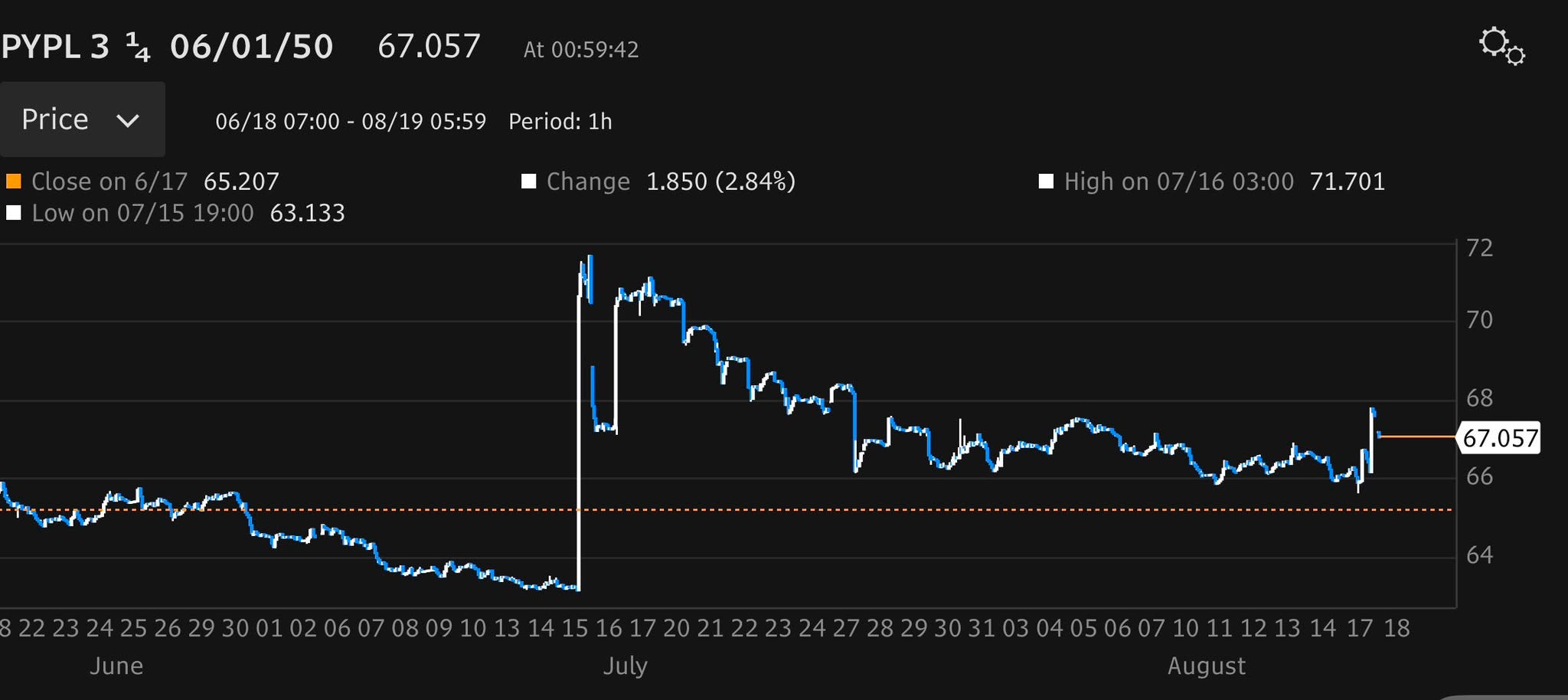
While liquidity may be limited at these levels, we view the 66-68 range as asymmetrically compelling with ~4-5% downside (including carry) and 10-55% upside in a range of scenarios (including defeasance / litigation).
Notably, unless the bid changes from being all-cash for 100% of the shares, we do not see a BidCo survives / dropdown structure as a feasible path to circumvent a CoC and subordinate the bonds in a more drastic downside scenario.
This is all happening on an accelerating timeframe, so let’s take a closer look at our latest R/R calculations as we game out the outcome distribution here.