

Asymmetry is probably one of the most overused terms on X.
Seeing many set-ups that purport to be asymmetric in nature: most likely in the context of being long a common stock and generally lacking a defined timeframe in addition to having wildly overstated right tail distributions
What truly defines asymmetry in my mind are two things: (i) a very tight and quantifiable downside and (ii) an appreciation for probabilistic outcomes and time decay
To illustrate this I will give you two perhaps counterintuitive examples involving (i) bonds and (ii) being short (which most would probably associate with downside asymmetry)
Example 1: China Real Estate High Yield Bonds
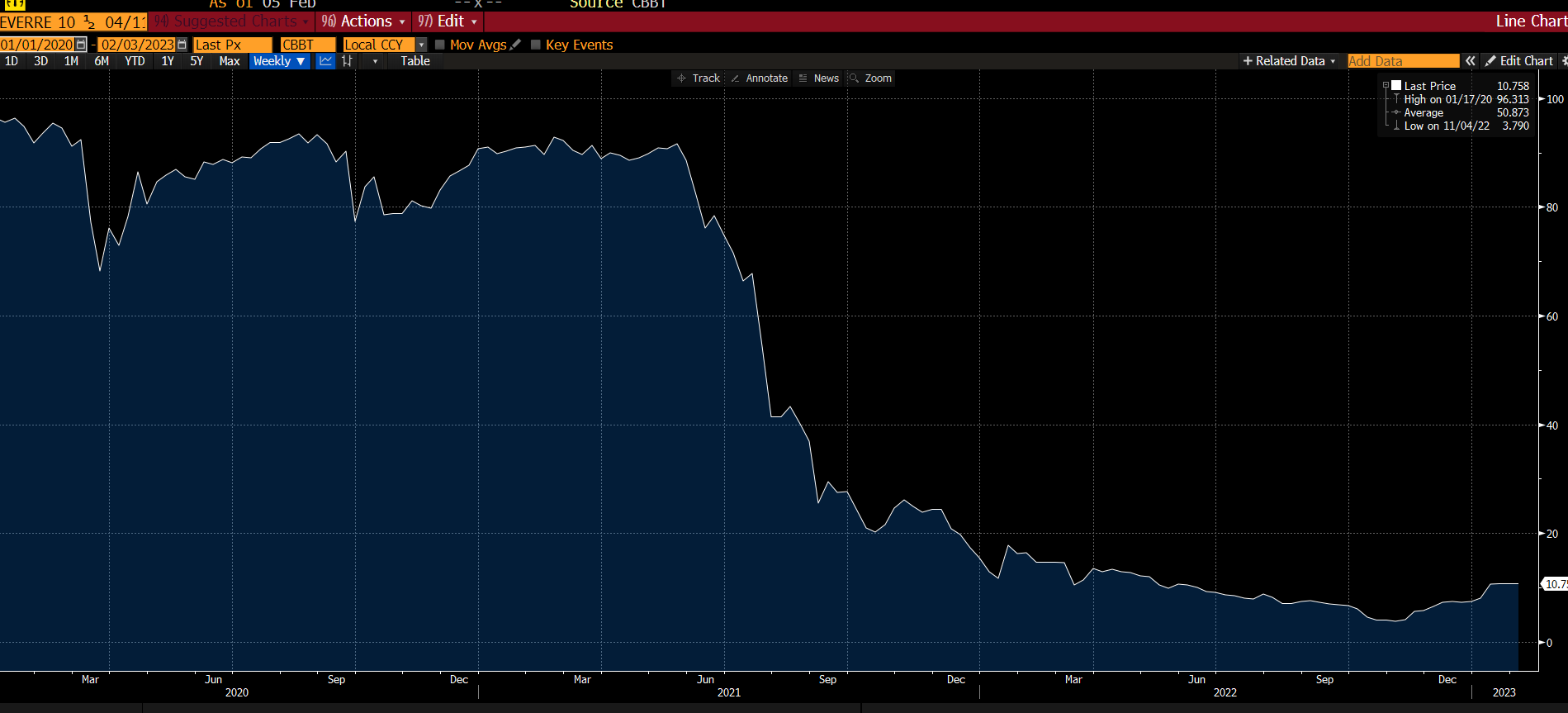
Back in December 2021, Evergrande (the poster child for the China RE bust) had already unravelled and its bonds were trading at ~20c on the dollar
Despite obvious contagion risk, the prevailing view at the time was that the universe was bifurcated towards the "strong" and "weak"
Whilst Evergrande dragged the weaker developers down with it, there was a flight to safety to what the market considered to be "blue-chip" developers
This created a very interesting 3-4 months window where a handful of China RE bonds were trading at or even above par
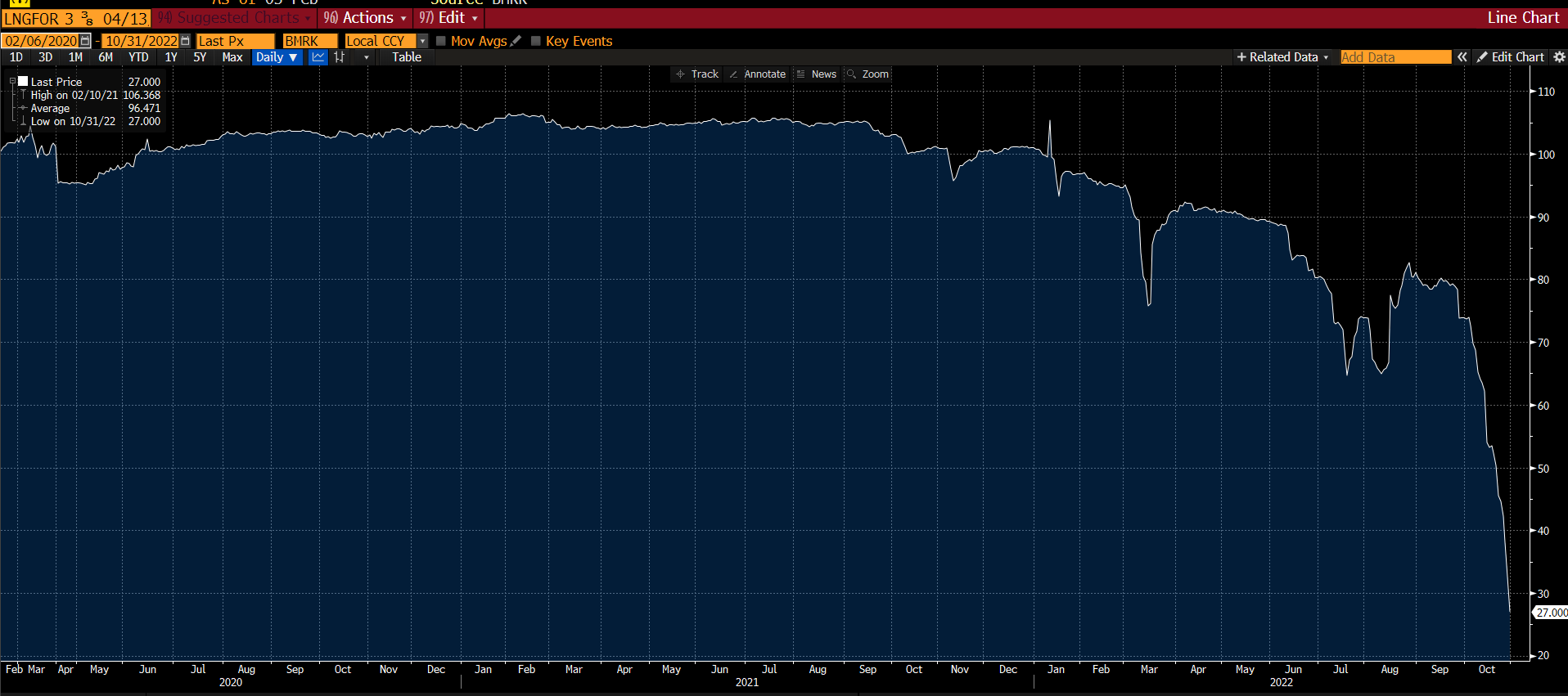
In January 2022, the bonds of Logan for example were trading well above par at ~104
What was the probability at that time that China would see a prolonged real estate downturn?
The trade set-up was straightforward: short Logan bonds (and comparable names) at 104 with a very low cost of carry (~1-2% per annum) and a high degree of probability that the contagion would worsen within a short time frame
Sure enough, Logan bonds traded all the way down to 27c in the space of 9 months
Example 2: $SATS Convertible Bonds (EchoStar)
Only 8 months ago, you could buy $SATS 2030 convertible bonds in the low 90s at an implied YTM (yield to maturity) of ~6%
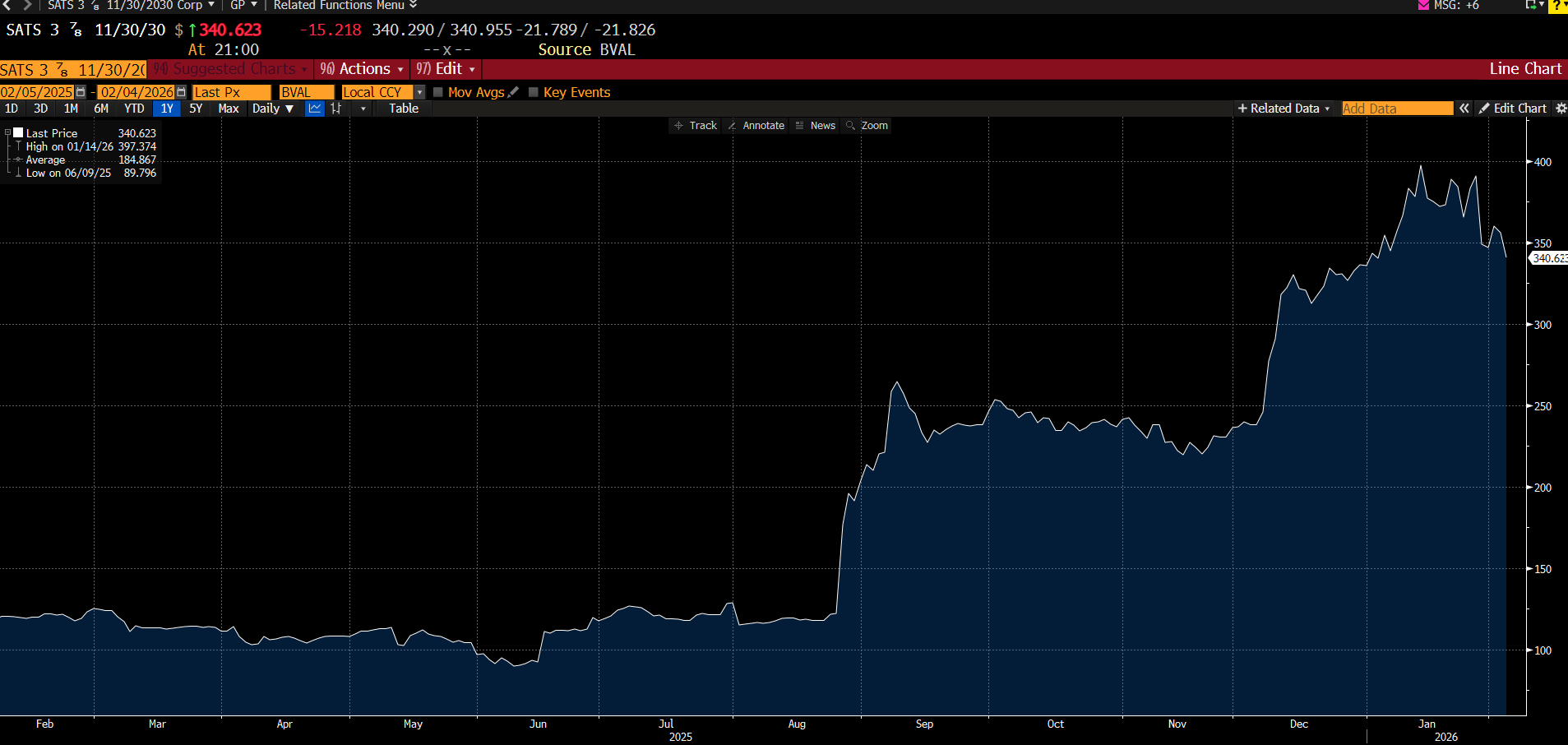
This was in the midst of the FCC debacle where the forced shift in business model created some capital structure dislocation
The advantage with credit is that, so long as you do the fundamental work right you are rewarded with defined return profiles and hard catalysts (maturity dates)
A sharp analyst will have done the work around the strategic value of the spectrum licenses and taken a view around the probability and extent to which the converts could get back ITM (in addition to being fully comfortable that the 2030s were par paper in any liquidation)
So you essentially had an uncapped return profile to the upside where at worst you were clipping your 6% YTM
Of course we know what a blockbuster trade this ended up being with converts up 3.7x from trough in less than a year
Asymmetry is the holy grail which underpins low drawdown / high sharpe track records. Having many instruments in your toolkit and knowing how to best express a view is what defines a great money manager