

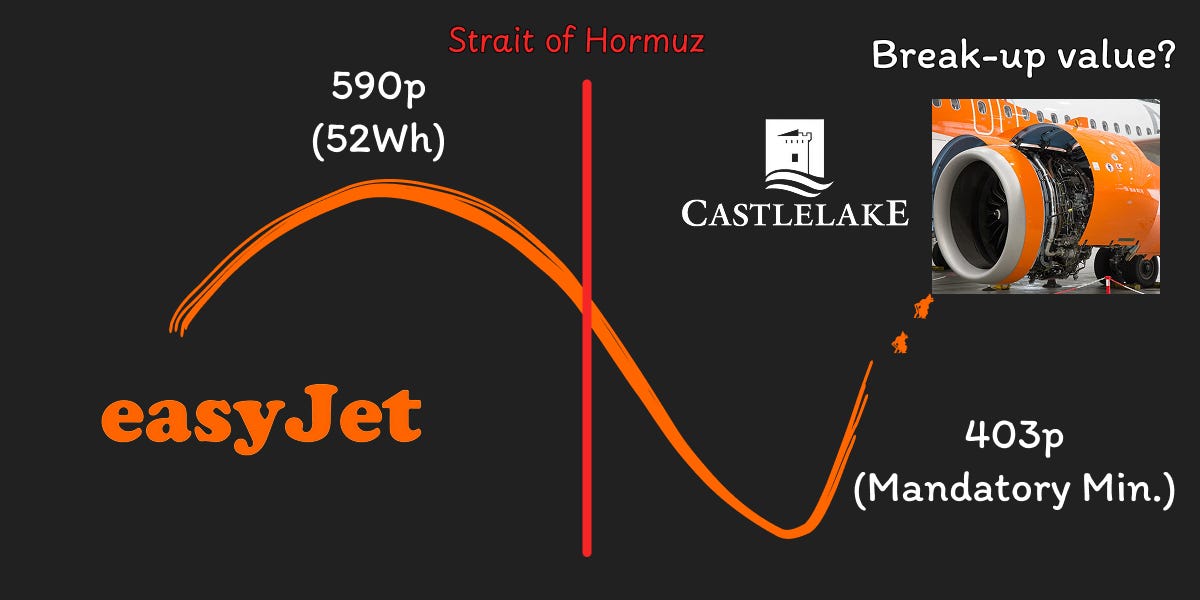
easyJet is currently in an offer period following Castlelake’s recent takeover overtures. Under the UK Takeover Code, Castlelake now has until 5:00pm on June 26th to either put-up or shut-up.
Specifically, this means announcing a firm (binding) intention to make a formal offer within 28 days, taking us to a July 24th Offer Date (at the latest) and from there kickstarting the official takeover timetable.
Having already acquired a >2% stake in the open market, Castlelake is subject to a mandatory minimum price for any offer at 403p / share (highest recent purchase), a level which is 32% below easyJet’s 52Wh.
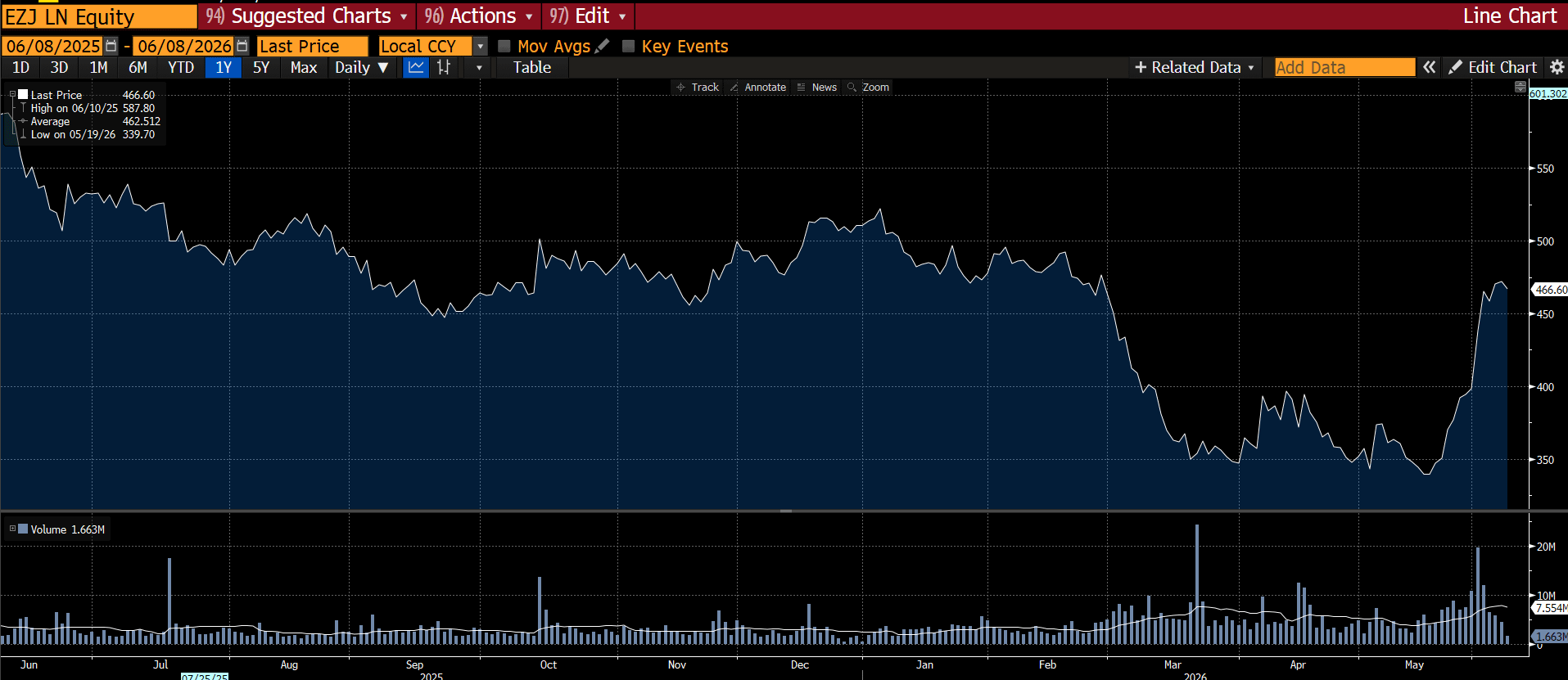
easyJet’s Board (as one might expect) dismissed Castlelake’s initial approach as being highly opportunistic following the Iran crisis and the knock-on effect on jet fuel prices and potential demand, while also questioning the deliverability of a transaction (alluding to foreign ownership rules).
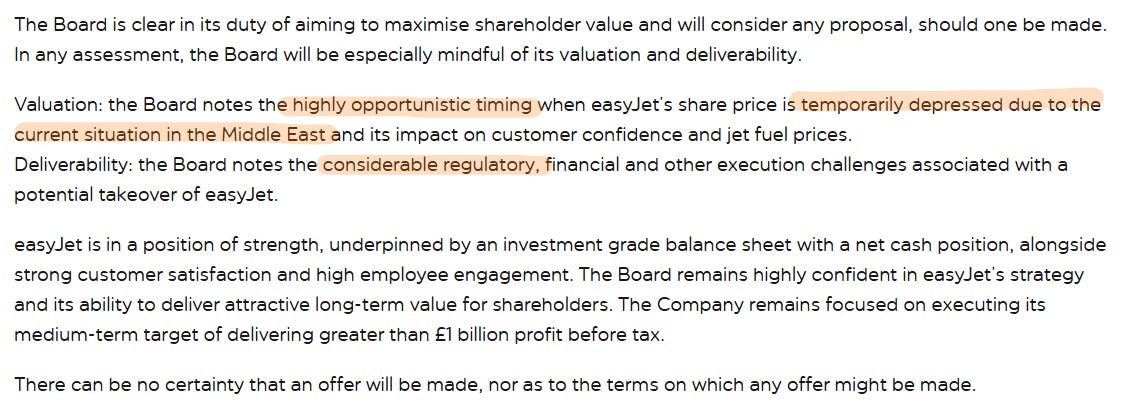
And so the dance begins. As at the time of writing, easyJet is trading at 469p / share.
While the analyst community agrees that 469p represents a discount to metal value, we take a look at the incremental swing factors that they are missing and why Castlelake likely has more room left in the tank.
The Middle Child
A competitive European LCC market has kept a lid on performance even ahead of the the Iran crisis. While historically profitable, easyJet has mostly traded at a discount to peers in recent years due to its hybrid market positioning and tougher unit economics.
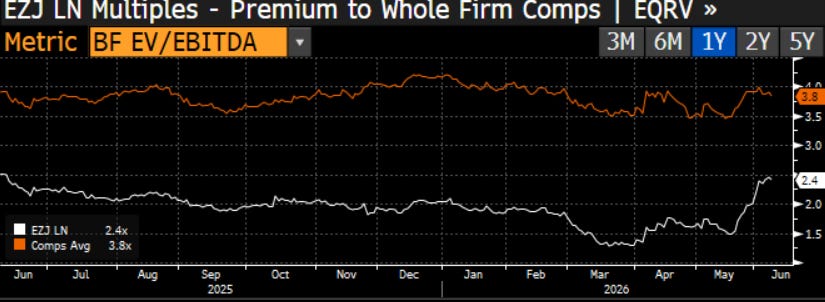
easyJet is at the high-end of the LCC market when it comes to its opex per passenger (ex-fuel). This is in part due to higher labour costs & disruptions, but also due to the fact that – while valuable – it operates in more primary, slot-constrained airports with higher associated airport and handling costs.
As a result, easyJet also charges higher fares vs. the ULCCs and tends to suffer from lower load factors.
On the other side of the spectrum, flag carriers such as IAG / Lufthansa operate under a fundamentally different model offsetting their higher cost base with business class seating and long-haul flights.
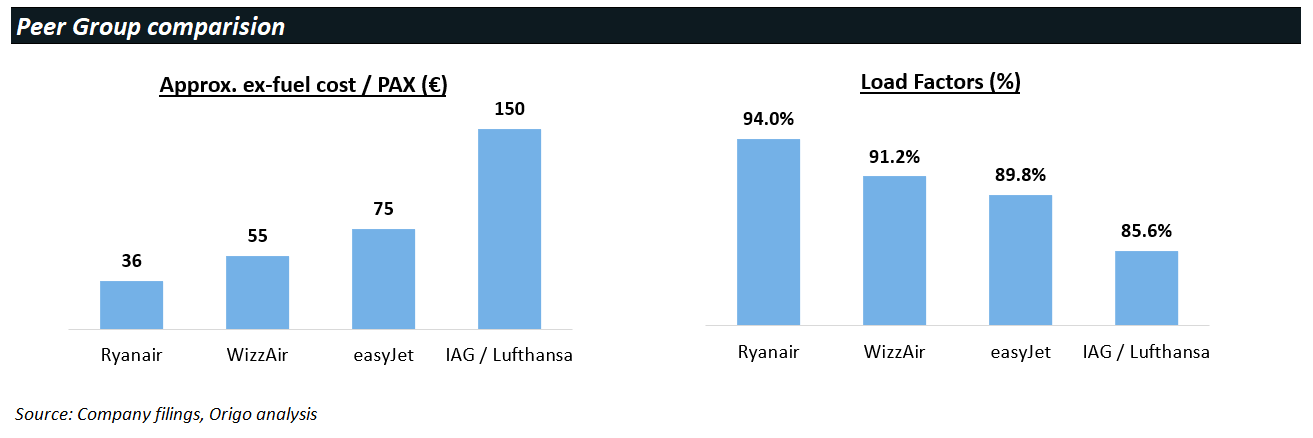
In other words, easyJet in a somewhat awkward middling position within an already competitive market in need of further consolidation.
A Balance Sheet Story with a Ton of Optionality
Despite this, easyJet’s balance sheet is very healthy. They own a majority of their fleet and have a £1.4B financial net cash position.
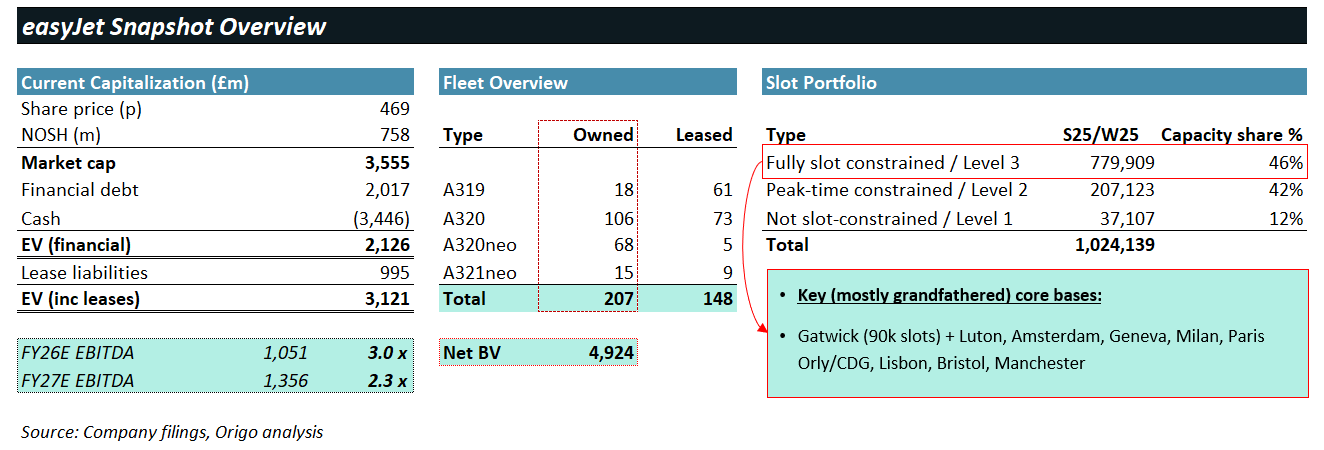
Additionally, they control a valuable slot portfolio with grandfathered landing rights in a number of core European airports, including 90k slots in Gatwick (~123 daily pairs). While historically marked at £155m within intangibles, the market value of these rights is likely materially higher with the value of prime daily slot pairs being potentially worth well north of >£2M each.
The owned fleet is carried on the books at a depreciated cost basis of £4.9B (which includes £626M related to advanced orderbook payments).
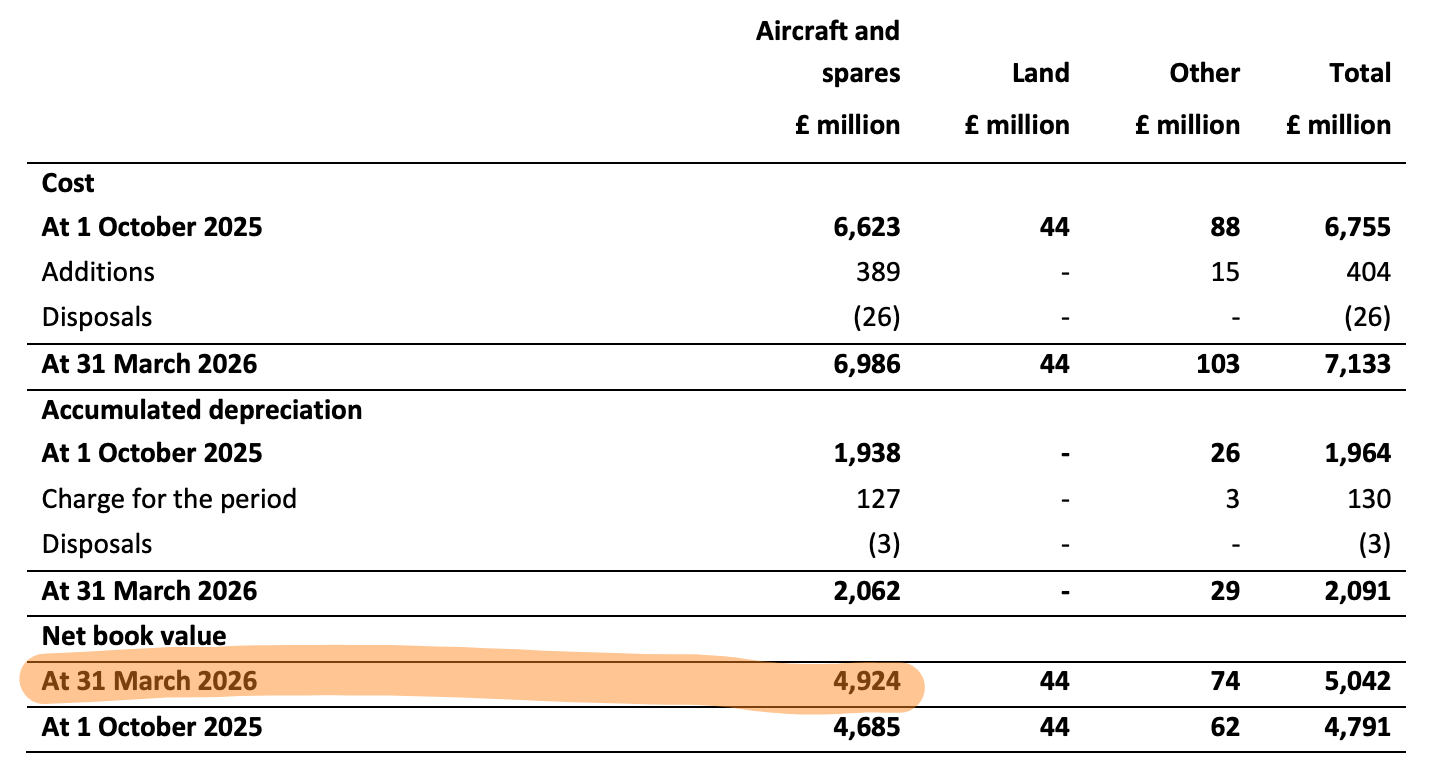
Again, the owned fleet value is likely understated here given the continued increase in engine values and downside protected part-out nature of the portfolio.
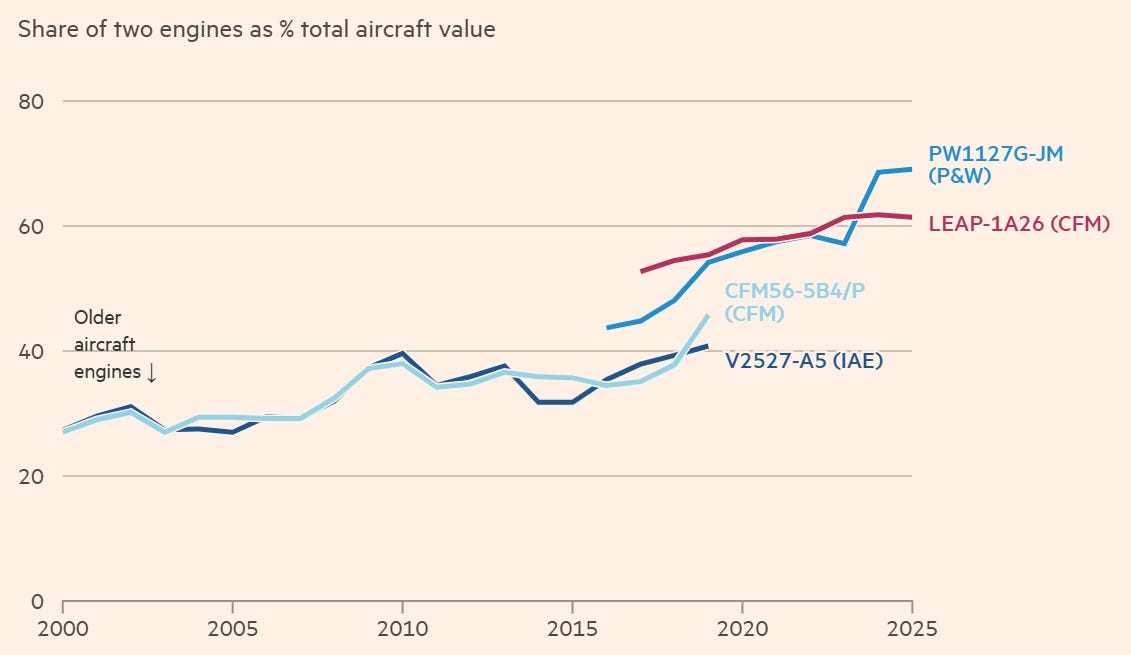
easyJet’s fleet is 100% narrowbody and 100% CFM engines which is as liquid as it gets. You may be familiar with CFM (Chris Hohn’s number one exposure via TCI’s holdings in GE Aerospace and Safran) – a great business which holds a quasi-monopolistic market position in narrowbody engines (P&W being the charitable competitor) with supply constrained escalation rates and pricing power. Labour shortages and MRO bottlenecks underpin valuation floors as engines represent an increasingly material % of ageing aircraft values.
In particular, their older generation A319/A320s are likely understated on an accounting depreciation basis vs. market value.
While we do not have the line-by-line breakdown of the mx adjustments by MSN, we can get to a reasonable half-life value ballpark range for the fleet.
Now let’s dig into how Castlelake might be looking at this, our assessment of a break-up value range including potential leakage & areas for optimisation. From there we reverse-engineer a potential range Castlelake may come in at.